When it comes to selecting continuing education for massage therapy, different therapists have different goals. Some LMTs take CE courses to meet license renewal requirements. (Here in Oregon, massage licensing requirements include 25 hours of massage CE every two years.) Others are drawn to the connection, inspiration, and hands-on learning that come from studying alongside other practitioners. Today we’re examining a third motivation for massage therapy continuing education: Building your massage business.
From the entrepreneur’s perspective, continuing education is not a box to be checked off, but rather an opportunity to grow your business. Here are a few ways to build an independent massage therapy practice through targeted continuing education courses:
1) Listen to Your Clients.
Customer research is an excellent way to select a CE course. If your current clients are asking about a certain modality that you currently don’t offer, there’s a good chance you can attract new business with CE on that topic. For instance, if you provide Swedish massage to your current clients, but they consistently ask you about hot stone massage, a CE course in hot stone massage would be a natural choice. There are many ways to find out what your clients want, such as in-person discussion, email surveys, fun quizzes on your website, or through an informal poll on socials.
2) Scan Job Listings to Research Local Demand for Massage Services.
Spas, medical massage clinics, and chiropractors typically do their own market research on what local clients want. Their job postings can offer useful insight into the modalities, specialties, and hands-on skills that are currently valued in your area. Adding CE in those areas can not only make you a more attractive candidate for employment, but also help you build a stronger, more marketable massage practice for clients in your community.
For instance, if you notice several local employers looking for experience in deep tissue massage, myofascial techniques, prenatal massage, injury-focused work, or oncology massage, that may point to areas where additional CE could help you better meet local demand.
3) Pursue Your Passion.
Joseph Campbell famously advised, “Follow your bliss.” Continuing education is an opportunity to follow your interests and build your massage practice. For instance, if you love working with pregnant women, a prenatal CE course is a great idea. When massage therapists are fired up about what they do, that passion is communicated to clients, who, in turn, are more compelled to pay for massage therapy.
A strong specialty is one that you could talk about endlessly, that gives you room to grow, and that is in demand in your community. While it can be tempting to study a wide range of modalities, a clear specialty can help your practice stand out in local searches, referral conversations, and social media content.
When researching your next CE course, consider which client populations naturally have referral opportunities. For instance, athletes would be happy to refer their teammates to an excellent sports massage therapist.
Another way to think about a specialty is to consider supply and demand. Chances are there are plenty of LMTs providing relaxation massage in your area. When many practitioners in your area offer similar services, it can be harder to differentiate your practice. A thoughtful specialty can help potential clients understand who you serve, what problems you help address, and why your approach may be the right fit for them.
4) Strengthen the Business Side of Your Practice.
Continuing education does not have to focus only on hands-on technique. Business, ethics, communication, documentation, marketing, bookkeeping, and client retention courses can also support a stronger massage practice. If your hands-on skills are strong but your schedule is inconsistent, business-focused CE can help you strengthen the systems, communication, and client relationships that support a sustainable practice.
Massage Therapy Continuing Education in Portland, Oregon
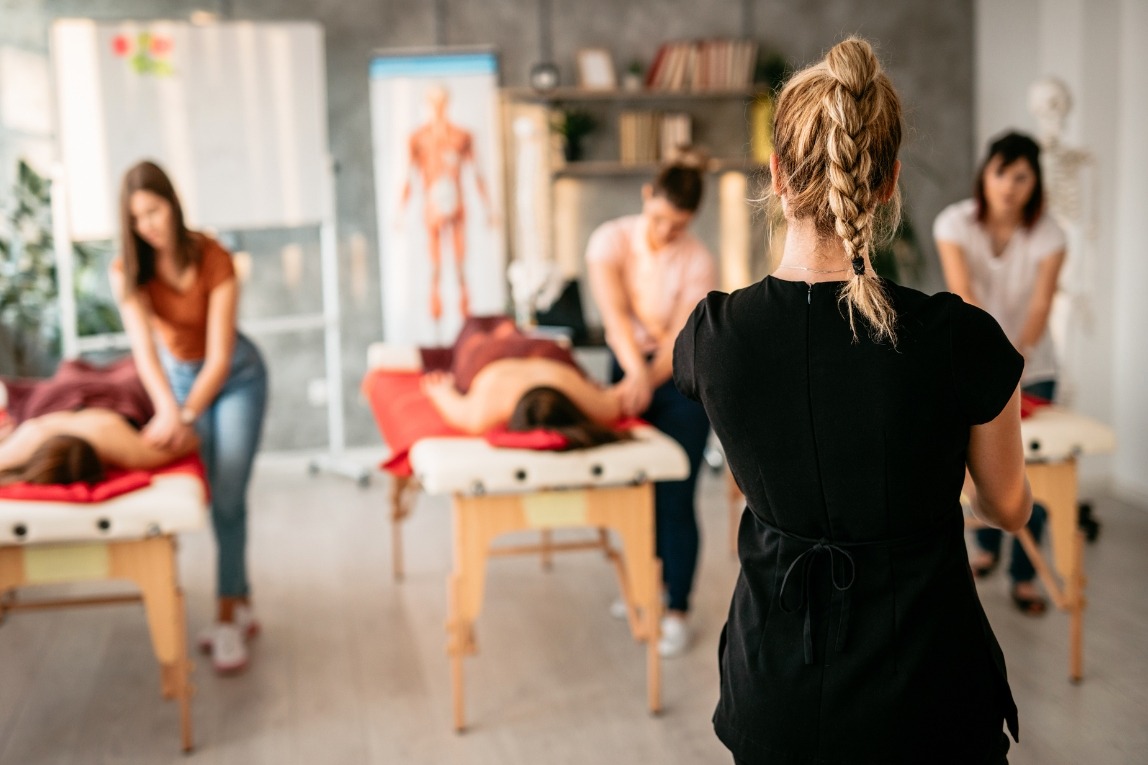
In-person continuing education offers more than new techniques. It gives massage therapists the opportunity to practice hands-on skills, connect with other practitioners, ask questions in real time, and return to their work with renewed focus.
Through BodyMindedCE, East West College supports LMTs with continuing education courses designed to help practitioners deepen their skills, explore new specialties, and grow sustainable massage careers. Explore upcoming massage therapy continuing education courses at BodyMindedCE.
Sources
American College of Sports Medicine. (2026). American Fitness Index: 2026 Rankings. https://acsm.org/about/community-impact-programs/american-fitness-index/rankings/